How We Fix a Steep Gravel Driveway with Erosion Problems
Steep gravel driveway washing out? Learn how we regrade, choose the right gravel, improve drainage, and set realistic cost expectations for a safer driveway.
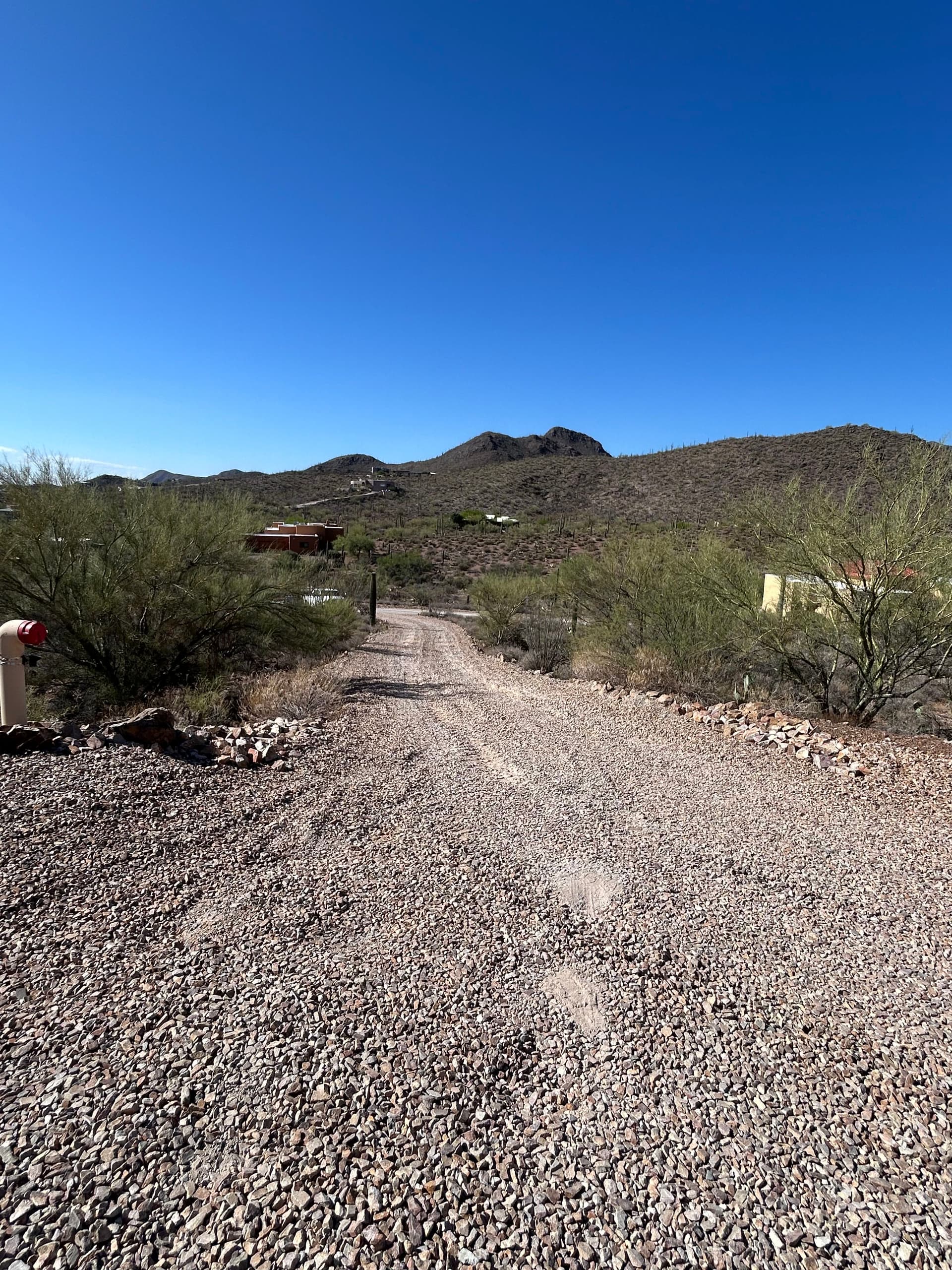
When a Steep Gravel Driveway Starts to Feel Unsafe
We recently got a call from a homeowner — let’s call her Kelly — about a steep gravel driveway that had gone from “a little rough” to “actually scary.” Her home sits up on a hill, and the driveway winds down to the street. Over time, rain had carved ruts into the gravel, and right at the street there was a 6–8 inch drop where the gravel had washed away.
By the time Kelly called us, the bottom half of the driveway had serious erosion, the top half was full of bumps and low spots, and getting in and out was getting harder by the week. She asked the same questions we hear all the time:
- “Can you actually fix a steep gravel driveway that keeps washing out?”
- “Do I need fill dirt or just more gravel?”
- “How do you make it safe again?”
- “And what kind of cost range am I looking at?”
Here’s how we walk homeowners like Kelly through fixing a steep, eroding gravel driveway — from regrading and material choices to safety and cost expectations.
Step 1: Diagnose the Real Problem (It’s Usually Water)
On any sloped driveway, gravity and water are the real enemies. When rain hits, the water follows the easiest path downhill. If the driveway is slightly crowned wrong or has low spots, water will concentrate into narrow channels and start cutting ruts.
With Kelly’s driveway, the worst erosion was between the street and about halfway up the hill. That told us a couple of things:
- Most of the runoff was racing down the steepest section and picking up speed.
- The bottom “apron” at the street wasn’t built up or protected, so water and traffic had chewed away an 6–8 inch drop.
Before we ever talk about new gravel, we look at:
- Existing slope and crown: Is there a gentle high point in the center so water sheds to the sides, or is it dished in the middle?
- Drainage paths: Do we have a place to send water off to the sides where it can safely soak in?
- Soil underneath: Is it firm native soil, or soft, loose fill that needs to be compacted or replaced?
If those basics aren’t right, any fresh load of gravel will just wash away again.
Step 2: Regrading a Steep Gravel Driveway the Right Way
Kelly told us half the driveway just needed to be “smoothed out,” and the other half had deep erosion. That’s pretty typical. Our regrading process usually looks like this:
- Scarify and loosen: We use a tractor or skid steer to break up the compacted surface and pull loose gravel back into the ruts and low spots. This lets everything blend back together instead of just hiding problems under a thin layer.
- Shape the crown: On a narrow, winding driveway, we usually build a slight crown (a gentle hump) in the middle, or sometimes a one-way slope if we want water to consistently shed to one side. The idea is to keep water moving off the driving surface quickly.
- Blend transitions: At the top near the garage slab and at the bottom by the road, we carefully feather the gravel so there’s no abrupt edge or drop. In Kelly’s case, removing that 6–8 inch “step” at the street was a big safety priority.
- Compact thoroughly: Once it’s shaped, we compact. On a steep drive, this is critical. We may run multiple passes with a roller or heavy equipment to lock everything together.
Regrading isn’t just about making the surface pretty; it’s about controlling where the water goes every time it rains.
Choosing the Right Gravel and Base Materials
Kelly described her gravel as larger than pea gravel, maybe around a quarter inch. That’s close to what many homeowners have: small, loose stone that’s comfortable to walk on, but not always the best for steep slopes.
For driveways with erosion issues, we often recommend a layered approach:
- Base layer (if needed): A thicker, angular rock (often 3/4" minus or similar) that locks together when compacted. This gives you strength and stability, especially where deep ruts have formed.
- Top layer: A smaller, angular gravel (like 3/8"–1/2" minus) that drives smoothly but still interlocks. We avoid round rock (like pea gravel) on steep slopes because it rolls and shifts easily.
Sometimes homeowners ask if they need fill dirt under the gravel. With Kelly, we talked through this as well. Our general rule:
- Use soil or fill dirt only if we truly need to rebuild missing subgrade and we can compact it in thin layers.
- Use gravel for most of the build-up on the driveway surface, especially where vehicles are driving and braking.
Bringing in the right mix of materials is one of the best ways to make sure the driveway holds up longer between maintenance passes.
Drainage and Safety Upgrades That Make a Big Difference
On a steep gravel driveway, safety is just as important as appearance. Kelly’s biggest concern was that it was “not safe” anymore, especially at the bottom where that drop to the road had formed.
Here are some improvements we often recommend for driveways like hers:
- Rebuild the road entrance: We feather gravel right out to the edge of the pavement or dirt road so there’s a smooth transition — no tire-busting ledge.
- Shallow swales along the sides: Low, shallow ditches or swales on one or both sides to catch water and keep it off the driving surface.
- Crowned curves: On winding sections, we pay attention to how vehicles turn and brake, and we may add a slight super-elevation or crown so water doesn’t collect on the inside of the curve.
- Surface texture: After compaction, we avoid over-smoothing a steep drive. A bit of texture gives tires better grip, especially in wet conditions.
Depending on the site, we might also suggest:
- Cross-drains or water bars in very steep sections to deflect water off the driveway.
- Edging or berms in targeted spots to keep water from cutting across the drive at an angle.
All of this is customized to the property, but the goal is always the same: make the driveway safer and help it survive the next big storm.
What Homeowners Can Expect to Spend
One of Kelly’s biggest questions — and maybe yours too — was about cost. She asked, “Is my starting point $5,000?” and wanted a ballpark range before we scheduled a visit.
Every driveway is different, but here’s how we generally explain the cost factors for a steep gravel driveway with erosion:
- Length and width: A 100+ foot driveway costs more than a short one, simply because of the material and machine time involved.
- How deep the damage is: Light regrading and a thin fresh layer of gravel is one price point; rebuilding deep ruts and reshaping the base is another.
- Material type and thickness: A basic refresh with a couple of inches of gravel is cheaper than a full base rebuild with multiple layers.
- Access and slope: Tight turns, steep grades, and limited space for trucks can add time and complexity.
For many homeowners with a long, steep, eroded gravel driveway, we find the project often lands somewhere in the low-to-mid thousands, but that’s a very general range. On the lower end, you might see:
- Regrading and smoothing an existing driveway with minimal new gravel.
On the higher end, costs typically involve:
- Hauling in multiple truckloads of new gravel.
- Rebuilding the entrance and addressing significant erosion.
- Extra drainage work or base repairs.
What we did for Kelly — and what we usually do — is pull up the property on satellite imagery first. That lets us estimate the length, width, and slope and give a realistic cost window (for example, “We’re likely between X and Y depending on how much new material we need”). Then, if that range feels comfortable, we schedule a site visit and firm up the numbers.
How to Keep Your Steep Gravel Driveway in Good Shape
Once the driveway is fixed, a little maintenance goes a long way toward avoiding the same problems down the road. We usually recommend homeowners:
- Watch the first few storms: After a heavy rain, walk the driveway and look for new ruts, channels, or soft spots. Catching them early is key.
- Keep drainage paths clear: If you have swales or ditches, make sure they’re not filling with leaves or debris.
- Avoid spinning tires: On steep sections, take it slow and steady. Spinning digs holes that water will enlarge later.
- Plan periodic touch-ups: On steep, gravel drives, it’s normal to need occasional regrading or a top-up of gravel every few years, especially after unusually heavy rains.
Thinking About Fixing Your Own Steep Gravel Driveway?
If your driveway is starting to look or feel like Kelly’s — ruts, washouts, a drop at the road that makes you cringe every time you pull in — it’s usually time to do more than just throw another bucket of gravel in the holes.
We’re always happy to talk through your specific driveway, take a look at it on satellite imagery, and help you understand what’s involved and what kind of budget makes sense. Whether you decide to tackle it yourself or bring in a crew, focusing on proper grading, the right materials, and good drainage will make your steep gravel driveway safer, smoother, and a lot less stressful every time it rains.