Drip Irrigation Leaks & Controller Problems in Desert Yards
Learn how to spot drip irrigation leaks and controller problems early so you can protect your desert landscaping, save water, and avoid surprise repair bills.
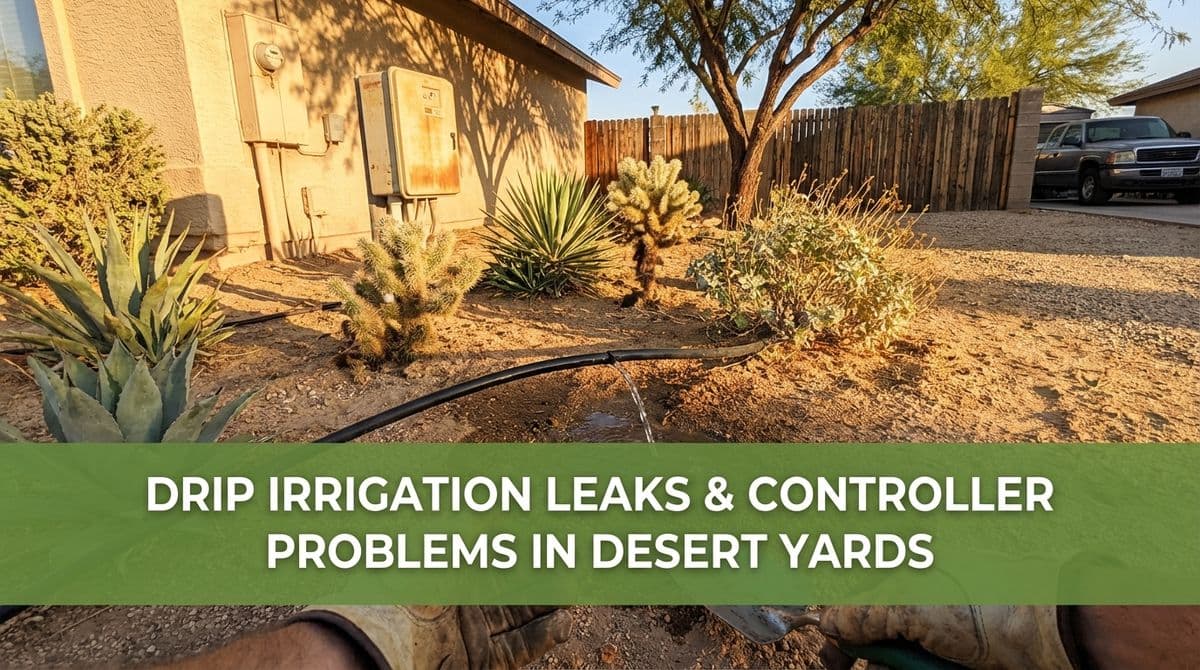
How a Small Drip Leak Turned Into a Big Wake-Up Call
We recently got a call from a customer — let’s call her Susan — who had that uneasy feeling every desert homeowner dreads.
She’d invested in new landscaping a year or so ago, and everything in the backyard was tied into a drip system. The front was mostly zero-scape, but the back had all her favorite plants. One morning, she noticed a suspiciously damp area and realized she had a drip irrigation leak. On top of that, her controller was acting strange — jumping to the wrong year and not responding consistently when she tried to reset it.
Susan was worried for two big reasons: first, she didn’t want to waste water, and second, she didn’t want her plants to cook in the desert heat if she shut the system off completely. She did what a lot of homeowners do: she started “fiddling” with zones, turning portions of the system off to see if she could isolate the leak while still keeping her plants alive.
That call turned into a great reminder of how early detection of drip irrigation leaks and controller problems can save your water bill, your plants, and your sanity.
Why Drip Irrigation Problems Sneak Up on Desert Homeowners
Unlike a broken sprinkler head that shoots water into the air, drip leaks and controller glitches tend to be quiet, hidden problems. In desert landscaping, where you’ve got rock, decomposed granite, and fabric over your lines, you often don’t see the issue until you have:
- A mysteriously high water bill
- Random wet spots in otherwise dry rock
- Plants that are suddenly stressed or dying
In Susan’s case, the system had been modified when a new commercial line was added in the back, but nobody clearly explained how the zones were set up or what had changed on the controller. That’s very common: new work gets done, but the homeowner isn’t walked through how to run or troubleshoot the new setup.
That’s why we like to start with a site visit. Before we touch anything, we walk the property with you, turn zones on one by one, and make sure we understand how your plants are tied into the system.
Early Signs Your Drip System Is Leaking
You don’t need professional tools to catch a lot of drip problems early. Here are signs we tell homeowners to watch for, especially in hot, dry climates:
- Soft or muddy spots under rock: In a desert yard, anything squishy underfoot is a red flag. Walk your lines once a month while a zone is running.
- Unexplained algae or moss: Green growth on rock or pavers usually means water is showing up there frequently.
- Plants growing faster in one strip: If one section is suddenly thriving compared to the rest, it might be getting extra water from a leak.
- Audible hissing or bubbling: Put your ear close to valve boxes and main lines; a steady hiss can indicate a hidden leak.
For a quick DIY check, we often suggest what Susan started to do: turn on one zone at a time and walk the area. If the wet spot appears only when a certain zone runs, you’ve narrowed the search area dramatically.
Common Drip Irrigation Leak Locations
When we’re called out on a drip leak, there are a few usual suspects we look at first:
- Emitter connections: Where the small tubing snaps into the main line is a frequent failure point.
- Cracked poly lines under rock: Heavy foot traffic, pets, or previous work (like drains or new rock) can crush or nick the tubing.
- Uncapped tees or abandoned lines: During landscape changes, old lines are sometimes left open instead of properly capped.
- Valve box fittings: Loose or cracked fittings in the valve box can cause slow, constant leaks.
Because Susan recently had drains and other work done, we suspected a line may have been damaged or never properly tied off. That’s exactly the kind of thing that can run for months before anyone notices.
How Controller Problems Make Leaks Even Worse
Of course, a leak is only half the story. In Susan’s case, the controller itself was misbehaving — jumping to the wrong year, not keeping time, and generally acting glitchy. When controllers go bad, they can:
- Run zones much longer than programmed
- Run at the wrong time of day (like mid-afternoon in peak heat)
- Skip cycles entirely, stressing plants
- Lose track of which valves are on which program
Combine a leaky line with a controller that’s secretly running two or three times a day, and you’ve got a recipe for a painful water bill.
Simple Controller Checks You Can Do Today
Before we replace a controller, we walk homeowners through a few basic checks. You can do the same:
- Verify the date and time: If your controller thinks it’s 2024 when it’s not, or the time jumps around, the internal battery or board may be failing.
- Check each program: Many controllers have A, B, and C programs. Make sure you don’t have overlapping schedules running the same valves multiple times a day.
- Run a manual cycle, zone by zone: Stand at the controller, start a manual run, and have someone outside confirm which area turns on with each zone.
- Look for dead or flickering display segments: A hard-to-read screen is often a sign it’s time to upgrade.
If you’re constantly “jiggling” settings to get the controller to behave, that’s usually the point where we recommend replacement instead of more troubleshooting.
Protecting Your Desert Landscaping While You Troubleshoot
One of Susan’s biggest concerns was, “If I turn this off to stop the leak, my plants will die in the heat.” That’s a valid worry in a desert climate. Here’s how we balance leak control and plant health:
- Shut off only the problem zone: If possible, turn off the specific valve serving the leaking area while keeping other zones running on schedule.
- Provide temporary hand-watering: For a day or two, a hose and a slow, deep soak around the base of each plant can bridge the gap until repairs are made.
- Avoid watering at high noon: If you must water manually, aim for early morning or late evening to reduce evaporation.
- Prioritize high-value plants: Focus on trees and established shrubs first; they’re more expensive and time-consuming to replace.
During our site visits, we’ll often set up a temporary schedule that protects your plants without wasting water while we plan any larger repairs or upgrades.
When to Call a Professional for Drip and Controller Issues
We’re all for homeowners understanding their own systems — we actually encourage it, and we love when customers, like Susan, want to be outside watching and learning while we work. But there are some clear signs it’s time to bring in a pro:
- You’ve isolated the problem zone, but can’t find the actual leak.
- The controller won’t keep time or loses its programming repeatedly.
- Your water bill has spiked with no obvious explanation inside the home.
- You’ve recently had other work done (rock, drains, new lines), and things haven’t worked right since.
On our end, we like to schedule a site visit, walk your yard, test zones, inspect the controller, and then provide a clear estimate before we start work. That way, you know exactly what’s going on underground and inside that little plastic box on the wall.
If you stay a step ahead of leaks and controller issues, your desert landscaping can stay healthy and beautiful — without surprise water bills or dead plants as the first warning sign.