How Much Does Desert Land Clearing Cost Per Acre?
Wondering what it really costs to clear a desert or vacant lot? We break down key price factors and per-acre examples so you can budget with confidence.
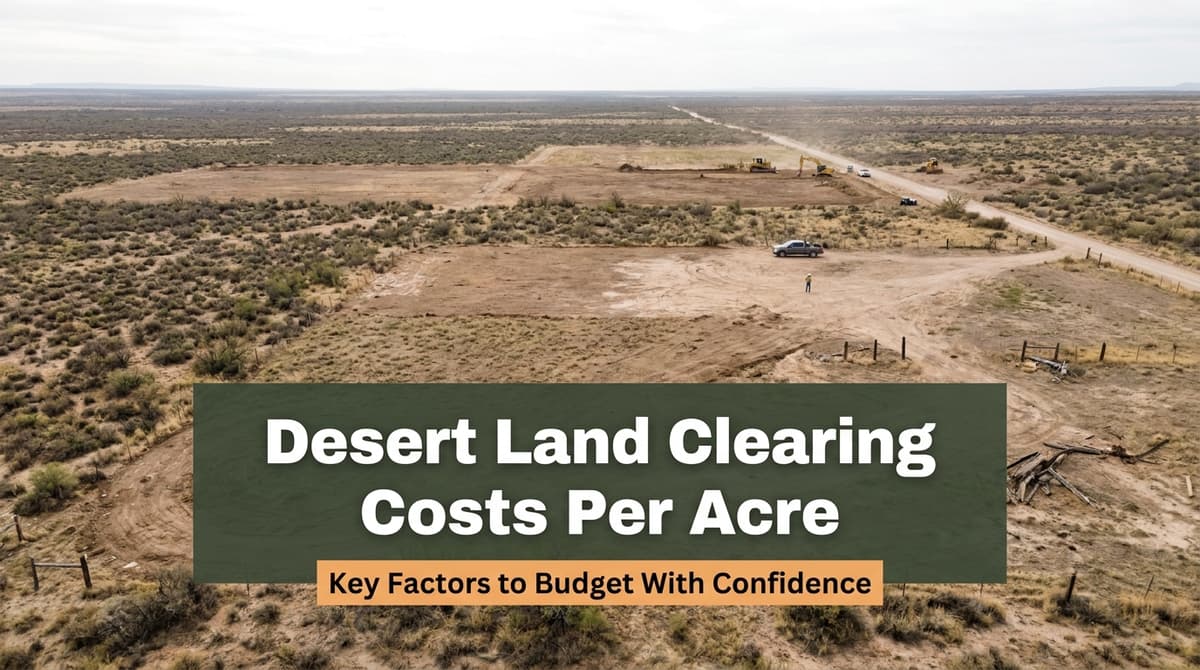
How Much Does It Cost to Clear a Desert Lot?
We recently got a call from a homeowner — we’ll call him Jim — who wanted a “wild ballpark” price to clear a little over an acre and a half of plain desert land. His lot had mostly creosote bushes, a few trees he wanted to keep, and a couple of storage containers sitting on fairly flat ground out in the county.
Jim’s main question was simple: “Am we looking at something closer to $1,000… or $10,000?” That’s exactly the kind of question we hear all the time from people with vacant or desert lots who are just starting to budget.
In this post, we’ll walk through how we think about desert land clearing costs, what really drives the price up or down, and some example price ranges based on acreage so you can run your own rough numbers.
Key Factors That Affect Desert Land Clearing Costs
When Jim called, we started with a few basic questions: Is it raw land? How big is the lot? Is it relatively flat? Anything you want to keep? Those same questions are the main cost drivers for almost every project.
1. Acreage and Overall Size
More acres usually means more time, more equipment hours, and higher cost. On the other hand, once we have machines on-site, the cost per acre often goes down for bigger jobs because mobilization and setup are spread over more area.
- Small lots (¼–½ acre): Higher cost per acre because of minimum trip and equipment charges.
- Medium lots (1–2 acres): A sweet spot where pricing per acre often improves.
- Larger parcels (5+ acres): Best value per acre, but bigger total bill.
2. Type and Density of Vegetation
Jim’s lot had mostly creosote on desert soil, which is fairly typical in our area. That’s very different from thick mesquite, tamarisk, or heavily wooded land, and the price reflects that.
- Light desert brush (creosote, small shrubs, sparse grass): Fastest and least expensive to clear per acre.
- Moderate growth (mesquite, scattered trees, heavier brush): Slower going, often requires heavier equipment or attachments.
- Heavy or overgrown (dense trees, large stumps, debris piles): Highest cost per acre because of extra time and disposal.
3. Terrain, Access, and Obstacles
Jim’s property was mostly flat, which helps. What can drive costs up are issues like:
- Steep slopes or uneven ground that slow equipment down.
- Poor access (narrow gates, soft sand, no good place for trucks to stage).
- Obstacles such as storage containers, fences, old concrete, or junk piles that we have to work around.
We can absolutely work around things you want to keep — like Jim’s few trees — but it does take a bit more time and care than clearing everything clean.
Typical Price Ranges for Desert Land Clearing (With Acreage Examples)
Every job is unique, but here are ballpark ranges we walk customers through for relatively flat desert lots with light to moderate brush (no massive trees or major grading work):
¼ Acre to ½ Acre Vacant Lot
- Typical range: $800 – $2,000
- Why: Minimum trip and equipment costs spread over a small area, so the price per acre looks higher.
1 Acre Desert Lot (Light Brush)
- Typical range: $1,500 – $3,000
- Includes: Clearing creosote and shrubs, rough leveling, basic cleanup of vegetation.
1.5–2 Acres (Like Jim’s Lot)
- Typical range: $2,500 – $5,000 for light-to-moderate brush.
- May include: Working around a few trees or storage containers, extra time for fine-tuning the cleared area.
3–5+ Acres Desert or Vacant Land
- Typical range: $4,000 – $10,000+ depending on brush density and access.
- Note: Cost per acre often drops on larger parcels, but total cost obviously goes up with size.
Again, these are starting ranges. Dense trees, debris removal, or special grading needs can push the numbers higher; very light scrub with great access can land on the lower end.
What’s Usually Included in a Desert Lot Clearing Quote?
When we talk through a “clear the lot” project with a homeowner, we like to be specific about what that means. A typical land clearing scope might include:
- Cutting and removing brush, shrubs, and small trees you don’t want.
- Grubbing out roots or stumps to reduce regrowth in key areas.
- Rough leveling and smoothing for basic access or future improvements.
- On-site grinding or hauling off green waste, depending on your plan and local rules.
What’s not usually included (unless requested) are things like detailed finish grading for foundations, importing fill dirt, or building pads — those are separate line items.
Quick Checklist: How to Prep Before We Clear Your Lot
A little preparation on your end can save time and help keep your project on budget. Before we bring equipment out, we recommend homeowners:
- Mark what stays: Flag trees, plants, or areas you want to protect so our crew knows your priorities.
- Identify property lines: Have stakes, a survey, or clear markers so we don’t clear beyond your boundaries.
- Move loose items: Relocate vehicles, trailers, and small equipment out of the work area.
- Plan access: Make sure gates are wide enough and any locks are removed or accessible on work days.
Permits, Disposal, and Other Common Questions
Do you need a permit to clear desert land?
Requirements vary by county and city. In many rural areas, basic brush clearing on your own property doesn’t require a permit, but larger grading, changing drainage, or disturbing protected plants may. We always encourage homeowners to check local regulations, and we can point you in the right direction based on where your lot is located.
What happens to all the brush and debris?
We typically offer a few options:
- Haul off: We load and dispose of vegetation at an approved facility (most convenient, higher cost).
- On-site piles: We stack brush in designated areas for you to handle later.
- Grinding/mulching (where appropriate): Turn brush into mulch that can be spread back on the property.
How to Get from “Wild Ballpark” to a Firm Quote
Jim started exactly where most people do: just trying to figure out if land clearing is a thousand-dollar project or a ten-thousand-dollar project. Once we knew his acreage, vegetation type (creosote on desert land), relatively flat terrain, and the few items he wanted to keep, we could narrow that ballpark down pretty quickly.
If you’ve got a vacant or desert lot you’re thinking about clearing, the best way to tighten up your numbers is to share:
- Approximate acreage or lot dimensions.
- Photos or a quick video of the vegetation and terrain.
- Any obstacles (containers, fencing, junk) and what needs to stay.
- Your end goal (RV parking, future home, fire break, resale, etc.).
From there, we can give you a realistic range — not just a wild guess — and, if you’re ready, schedule a site visit to lock in a firm price.